An In-Depth Research Article for Developers, Investors, Students, and Construction Professionals
Abstract
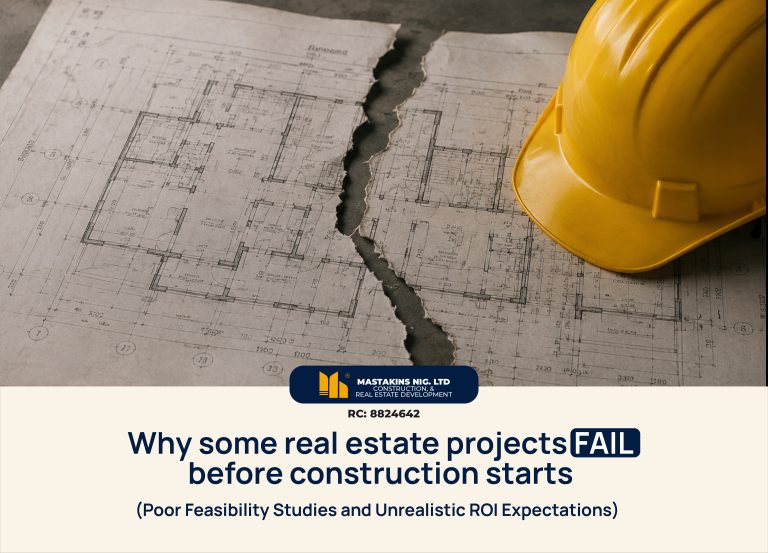
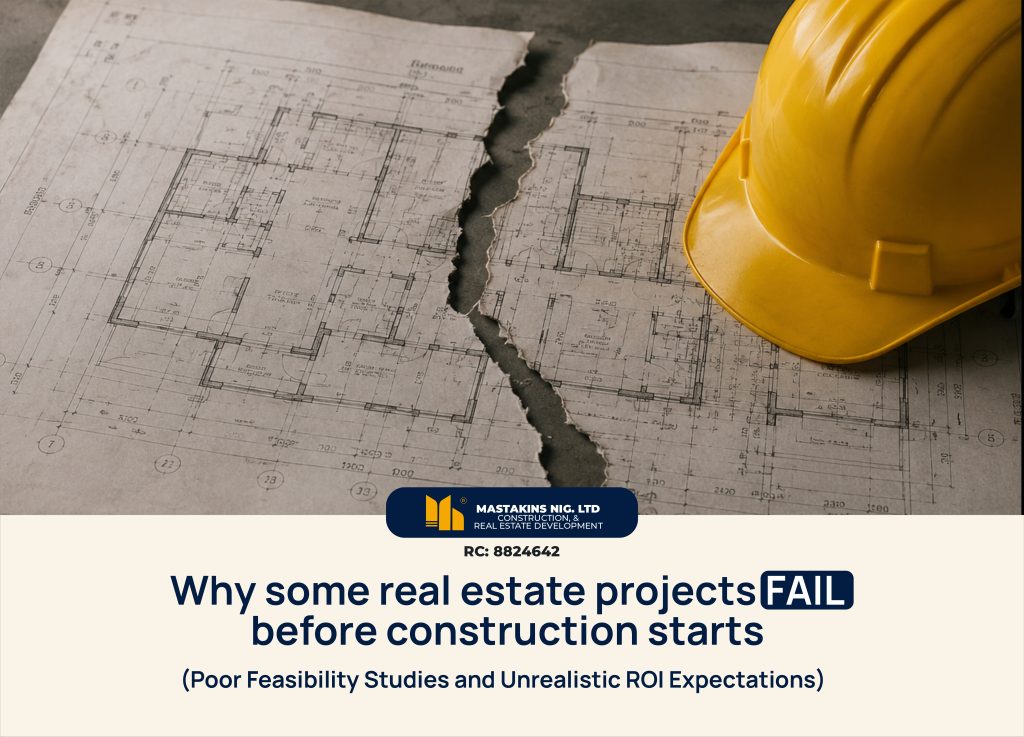
A surprising number of real estate developments fail before the first block is laid. The reasons are rarely architectural or construction-related alone; they are usually rooted in poor strategic planning. This paper examines the technical, financial, legal, commercial, and managerial causes of pre-construction failure and presents practical recommendations drawn from accepted project management and development principles.
Introduction
Real estate development is a multidisciplinary process involving finance, engineering, architecture, planning, law, economics, marketing, and risk management. Decisions made during project conception determine the probability of success more than any activity performed during construction. A weak concept, unsupported by research, can consume significant capital without ever reaching site. Experienced developers therefore invest heavily in pre-development investigations because correcting planning mistakes after construction begins is extremely expensive.
1. Poor Feasibility Studies
A feasibility study should determine whether a project deserves to exist. It integrates market feasibility, technical feasibility, financial feasibility, legal feasibility, environmental feasibility and operational feasibility. Weak studies often rely on outdated data, unrealistic assumptions, copied reports or incomplete investigations. As a result, developers misunderstand demand, underestimate cost, overlook regulatory barriers and misjudge project risks.
Many projects rely on assumptions instead of reliable data. Developers may copy figures from unrelated locations, underestimate infrastructure costs, ignore inflation, or fail to conduct proper market surveys. Optimistic projections without supporting evidence create unrealistic business cases that quickly collapse when financing institutions or investors perform due diligence.
2. Market Failure Before Construction
Demand is often assumed rather than measured. Developers may design luxury apartments where demand exists for mid-income housing, oversupply office space in declining markets or ignore demographic trends. Robust market studies analyse household income, purchasing power, employment trends, vacancy rates, competing developments, infrastructure growth and customer preferences. Without this evidence, projects struggle to attract investors even before approvals are obtained.
3. Unrealistic Financial Models and ROI Expectations
Financial optimism is one of the most common causes of project failure. Revenue projections may assume immediate sales, full occupancy, stable exchange rates and unchanged construction costs. In reality, inflation, interest rates, taxes, import costs, foreign exchange volatility and economic downturns can significantly alter profitability. Professional feasibility studies therefore include sensitivity analysis, scenario analysis and contingency allowances rather than relying on a single optimistic forecast.
ROI measures the financial return generated from an investment. Problems arise when developers expect unusually high profits within unrealistic timelines. They may inflate selling prices, assume every unit will sell immediately, underestimate financing costs, or ignore economic cycles. Such assumptions produce attractive spreadsheets but weak investment decisions.
Consequences
Before construction starts, unrealistic assumptions can lead to funding rejection, investor withdrawal, inability to secure bank loans, redesigns, planning delays, cash-flow shortages, or complete project abandonment. In many cities, abandoned sites represent failed pre-construction planning rather than failed construction.
4. Land, Planning and Regulatory Risks
Ownership disputes, defective titles, zoning restrictions, environmental impact requirements, utility easements, community objections and planning approval delays frequently stop projects before construction. Comprehensive legal due diligence should verify title, planning compliance, encumbrances, statutory approvals and development restrictions before land acquisition or financing.
5. Weak Governance and Decision-Making
Many developments are driven by emotion instead of evidence. Family-owned businesses, inexperienced investors and speculative developers sometimes reject professional advice in favour of intuition. Effective governance requires transparent decision-making, independent consultants, documented assumptions and periodic project reviews.
6. Funding Structure and Capital Planning
Even technically sound projects fail when capital planning is weak. Developers must understand debt-equity ratios, working capital requirements, staged funding, cash-flow timing and contingency reserves. Banks and institutional investors typically require comprehensive feasibility reports because they reduce lending risk.
7. Risk Management
Risk management should begin before design development. Key risks include inflation, exchange-rate movements, policy changes, contractor availability, supply-chain disruptions, political uncertainty, environmental constraints and market shocks. Quantifying these risks enables better investment decisions.
Professional developers reduce uncertainty through sensitivity analysis, scenario planning, independent cost estimates, realistic contingency allowances, phased development strategies, and periodic review of market data. Conservative assumptions usually produce more resilient projects than aggressive forecasts.
Lessons
Students should recognize that project success begins long before construction. Professionals should treat feasibility studies as decision-making tools rather than documents prepared merely to satisfy investors. Good planning protects capital, improves stakeholder confidence, and reduces the likelihood of project failure.
Professional Recommendations
Carry out independent feasibility studies; commission professional market research; prepare detailed cost plans with quantity surveyors; adopt conservative financial assumptions; engage legal advisers early; conduct sensitivity analyses; establish governance structures; and review project assumptions continuously as market conditions evolve.
Conclusion
Projects rarely fail overnight. Failure is usually the cumulative result of poor information, weak governance and unrealistic expectations established during project conception. Developers who invest in rigorous pre-construction planning improve investor confidence, reduce uncertainty and increase the likelihood of delivering profitable, sustainable developments. For students and professionals alike, the central lesson is that successful construction begins with successful decision-making.
Suggested References
- Project Management Institute (PMBOK Guide).
- RICS Guidance Notes on Development Appraisal and Feasibility.
- Ashworth, A. Cost Studies of Buildings.
- Urban Land Institute publications on real estate development.
- Blog Article by;
- Mastakins Nigeria Limited,
- A construction and real estate development company, where we deliver innovative
- solutions for all your construction needs by combining modern technology, smart design,
- and advanced building practices. From energy-efficient systems and smart
- building integration to sustainable materials and cutting-edge project management,
- we create durable, functional, and future-ready spaces that exceed expectations while
- maximizing long-term value.