Introduction
For many people, building a house is one of the biggest dreams of their lifetime.
A house represents more than just shelter. It represents achievement, stability, security, investment, and legacy.
Many individuals spend years saving money with the hope of eventually constructing their own home. Some people buy land first and plan gradually, while others secure loans or investment capital to begin development immediately.
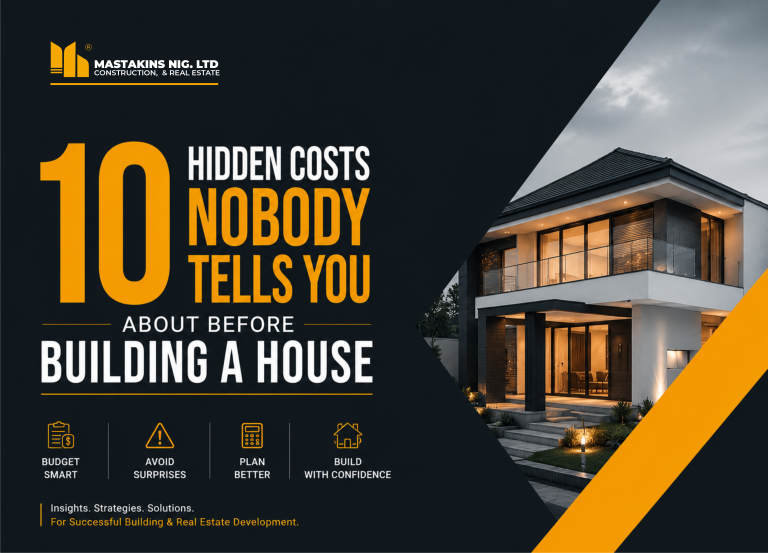
However, one of the biggest shocks many first-time builders experience is discovering that building costs are far higher than they originally expected.
Most people focus only on visible construction expenses such as:
- Blocks
- Cement
- Roofing
- Labor
- Paint
But construction involves many hidden costs that are rarely discussed openly.
These hidden expenses are one of the main reasons why:
- Projects become abandoned
- Budgets collapse midway
- Construction slows down
- Financial pressure increases
- Stress and frustration rise
Understanding these hidden costs is extremely important for homeowners, investors, and developers.
This article explores some of the most important hidden expenses involved in building projects and why proper financial planning is critical.
Soil Testing and Site Investigation Costs
One of the first hidden costs many people ignore is soil testing.
Some property owners purchase land and immediately begin excavation and foundation work without understanding the condition of the soil beneath the structure.
This is dangerous because different soils behave differently.
Some soils can safely support heavy structural loads, while others may experience settlement, movement, erosion, or instability.
A proper geotechnical investigation helps engineers determine:
- Soil strength
- Bearing capacity
- Water table level
- Suitable foundation type
- Settlement risks
Unfortunately, many people see soil testing as an unnecessary expense because the process is not visually impressive compared to actual construction activities.
However, the absence of soil investigation can create far greater financial losses later.
If a foundation fails because the soil was weak, repair costs can become extremely expensive.
In severe situations, structural collapse may occur.
Soil testing may involve:
- Borehole drilling
- Laboratory analysis
- Geotechnical reporting
- Engineering recommendations
Although this increases initial project costs, it significantly reduces long-term structural risks.
Government Approval and Documentation Costs
Another hidden expense many people underestimate is the cost of regulatory approvals and documentation.
Before construction begins legally, several approvals may be required depending on the project location and scale.
These may include:
- Building plan approval
- Survey documentation
- Environmental permits
- Development levies
- Inspection fees
- Utility approvals
Many first-time developers do not account for these costs when preparing their budgets.
As a result, construction may suddenly stop because necessary approvals were not obtained.
In some cases, authorities may issue stop-work notices or impose penalties.
Proper regulatory compliance is extremely important because it helps ensure:
- Structural safety
- Environmental compliance
- Proper urban planning
- Drainage management
- Fire safety standards
Ignoring approval processes may appear cheaper initially, but the long-term risks are far greater.
Inflation and Material Price Fluctuation Can Destroy Budgets
Construction is heavily affected by economic instability.
In Nigeria especially, inflation and exchange rate fluctuations can dramatically increase project costs.
Many people create budgets based on current material prices without considering future increases.
Unfortunately, construction projects often last several months or years.
During this period, prices of:
- Cement
- Reinforcement steel
- Fuel
- Electrical materials
- Tiles
- Plumbing fittings
- Roofing sheets
may rise significantly.
A project originally estimated at ₦25 million may eventually require far more.
This is one of the main reasons why many buildings become abandoned halfway.
Inflation affects almost every part of construction.
Transportation costs increase. Labor costs rise. Imported materials become more expensive.
Developers should always include contingency allowances within their budgets.
Financial planning must anticipate uncertainty.
Professional Consultancy Fees Are Often Underestimated
Many people try to reduce costs by avoiding professional consultants.
Unfortunately, this often creates larger financial problems later.
Professional services are essential because construction is highly technical.
Common professionals involved in building projects include:
- Architects
- Structural engineers
- Civil engineers
- Quantity surveyors
- Mechanical engineers
- Electrical engineers
- Project managers
These professionals help ensure:
- Proper design
- Structural stability
- Accurate budgeting
- Technical coordination
- Regulatory compliance
- Efficient project execution
Some developers mistakenly believe professional fees are unnecessary expenses.
However, the absence of professional guidance often leads to:
- Design errors
- Structural problems
- Cost overruns
- Delays
- Poor workmanship
The financial losses caused by poor construction decisions usually exceed the cost of hiring qualified professionals.
Site Preparation Can Become More Expensive Than Expected
Before construction even begins, the site itself may require significant preparation.
Some lands appear affordable initially because buyers fail to consider preparation challenges.
Site preparation costs may include:
- Clearing vegetation
- Excavation
- Demolition
- Sand filling
- Soil stabilization
- Drainage work
- Access road improvement
Certain sites require far more preparation because of:
- Swampy conditions
- Rocky terrain
- Flood-prone areas
- Poor accessibility
- Erosion risks
For example, swampy land may require massive sand filling before construction can proceed safely.
These additional costs can dramatically affect budgets.
Security Costs Are Frequently Ignored
Construction materials and equipment are valuable assets.
Unfortunately, theft is common on many construction sites.
Without proper security systems, developers may lose:
- Cement
- Reinforcement bars
- Electrical materials
- Fuel
- Equipment
- Plumbing fittings
Security costs may include:
- Security guards
- Site fencing
- CCTV systems
- Lighting systems
- Access control
Some people ignore these expenses initially and later suffer major financial losses from theft or vandalism.
Security is not optional on active construction sites.
Temporary Water and Power Supply Consume Significant Money
Construction activities require water and electricity continuously.
Many people underestimate utility costs during projects.
Expenses may include:
- Generator fuel
- Water supply
- Borehole drilling
- Temporary electrical connections
- Equipment power consumption
In environments with unstable public electricity supply, fuel consumption alone can become a major financial burden.
Long project durations increase these costs further.
Finishing Costs Are Usually Much Higher Than Expected
One of the biggest surprises in construction is the finishing stage.
Many developers focus heavily on structural work and underestimate finishing expenses.
However, finishes determine much of the visual appearance and comfort level of the building.
Finishing costs may include:
- Tiles
- POP ceilings
- Doors
- Windows
- Paint
- Kitchen fittings
- Bathroom accessories
- Wardrobes
- Lighting systems
- Furniture
Luxury finishes can multiply project costs significantly.
Many people run out of funds during this stage because they did not plan properly.
The desire to achieve modern aesthetics often increases spending unexpectedly.
Waste Management and Site Cleaning Also Cost Money
Construction generates large quantities of waste materials.
Examples include:
- Broken blocks
- Concrete waste
- Wood scraps
- Packaging materials
- Excavated soil
Waste management involves:
- Disposal trucks
- Labor
- Environmental compliance
- Site cleaning
Poor waste management creates unsafe working conditions and environmental problems.
These operational costs should be included within project planning.
Maintenance Costs Continue Even After Construction Ends
Many people assume expenses stop after project completion.
In reality, buildings require continuous maintenance.
Every building deteriorates gradually over time if maintenance is ignored.
Maintenance expenses may involve:
- Electrical repairs
- Plumbing maintenance
- Roofing repairs
- Painting
- Cleaning systems
- Security systems
- Mechanical equipment servicing
Buildings that receive poor maintenance lose value rapidly.
Proper facility management helps preserve property value and extend building lifespan.
The Emotional Cost of Building Is Rarely Discussed
Beyond financial expenses, construction also creates emotional pressure.
Many people experience:
- Stress
- Anxiety
- Frustration
- Family tension
- Mental exhaustion
This often happens because of:
- Budget pressure
- Delays
- Contractor disputes
- Rising costs
- Poor planning
Construction projects require patience, discipline, and emotional resilience.
Working with experienced professionals can reduce many of these pressures.
Conclusion
Building a house is far more complex than many people realize.
The visible construction activities represent only part of the total financial reality.
Many hidden costs exist behind every successful project, including:
- Soil investigation
- Regulatory approvals
- Inflation
- Consultancy services
- Site preparation
- Security
- Utilities
- Waste management
- Finishing expenses
- Long-term maintenance
Understanding these hidden expenses helps developers prepare more realistically.
Successful projects depend heavily on:
- Proper planning
- Financial discipline
- Professional guidance
- Risk management
- Long-term thinking
The smartest builders are not necessarily those who spend the least. They are the ones who plan the best and make informed decisions from the beginning.